Choosing new flooring is one of the biggest decisions in any remodel, and the hardwood floor vs LVP debate comes up in almost every project we quote. Both options look beautiful on day one. However, they behave very differently over ten or twenty years of daily living, and the right choice depends on your rooms, your household and your budget.
At Build Strong Construction & Remodeling, our flooring installation team installs both materials across Walnut Creek and the East Bay. This guide shares what we have learned on real job sites so you can make a confident, informed decision.
What Is the Difference Between Hardwood and LVP?
Solid hardwood is milled from a single piece of natural timber such as oak, maple or hickory. Engineered hardwood uses a real wood top layer bonded to a stable plywood core. Either way, the surface you walk on is genuine wood with natural grain that no two boards share.
Luxury vinyl plank, usually called LVP, is a synthetic product. It combines a rigid core, a high-resolution printed image of wood and a clear wear layer that protects the surface. Modern LVP looks remarkably realistic, and many visitors cannot tell the difference from a few feet away.
Cost Comparison: Hardwood Floor vs LVP
Budget is usually the first factor homeowners raise. In general, LVP costs noticeably less than hardwood for both materials and labor. Planks click together as a floating floor, so installation moves quickly and rarely requires nails, glue or long acclimation periods.
Hardwood carries a higher upfront price because the material is natural and installation demands more skill. Solid boards are nailed down, and site-finished floors need sanding, staining and several coats of finish. As a result, a hardwood project typically takes longer and costs more per square foot.
Keep in mind that subfloor condition affects both options. If we discover soft spots or old water damage, repairs must happen first. Our article on how to fix water-damaged flooring explains what that process usually involves.
Durability and Everyday Wear
LVP shines in busy households. Its wear layer resists scratches from pet claws, dropped toys and chair legs far better than most wood finishes. A thicker wear layer, often listed in mils, generally means longer life, so we always recommend checking that specification before you buy.
Hardwood is softer and will show dents and scratches over time. Some homeowners love that lived-in character, while others find it frustrating. Fortunately, solid hardwood can be sanded and refinished several times, which can make an older floor look nearly new again.
That refinishing ability is a major advantage. When LVP becomes damaged, you replace individual planks rather than repair the surface. For families with children and animals, our guide to the best flooring for homes with pets and kids offers more detail.
Water Resistance and Moisture
Water is where the two materials differ most. Quality LVP is highly water-resistant, and many rigid core products are marketed as waterproof at the surface. That makes LVP a smart pick for kitchens, laundry rooms, basements and bathrooms.
Hardwood does not tolerate standing water well. Spills must be wiped quickly, and long-term leaks can cause cupping, warping or staining. For that reason, we usually suggest keeping solid hardwood out of full bathrooms and mudrooms. Engineered hardwood handles humidity changes better, but it still is not waterproof.
Look, Feel and Comfort Underfoot
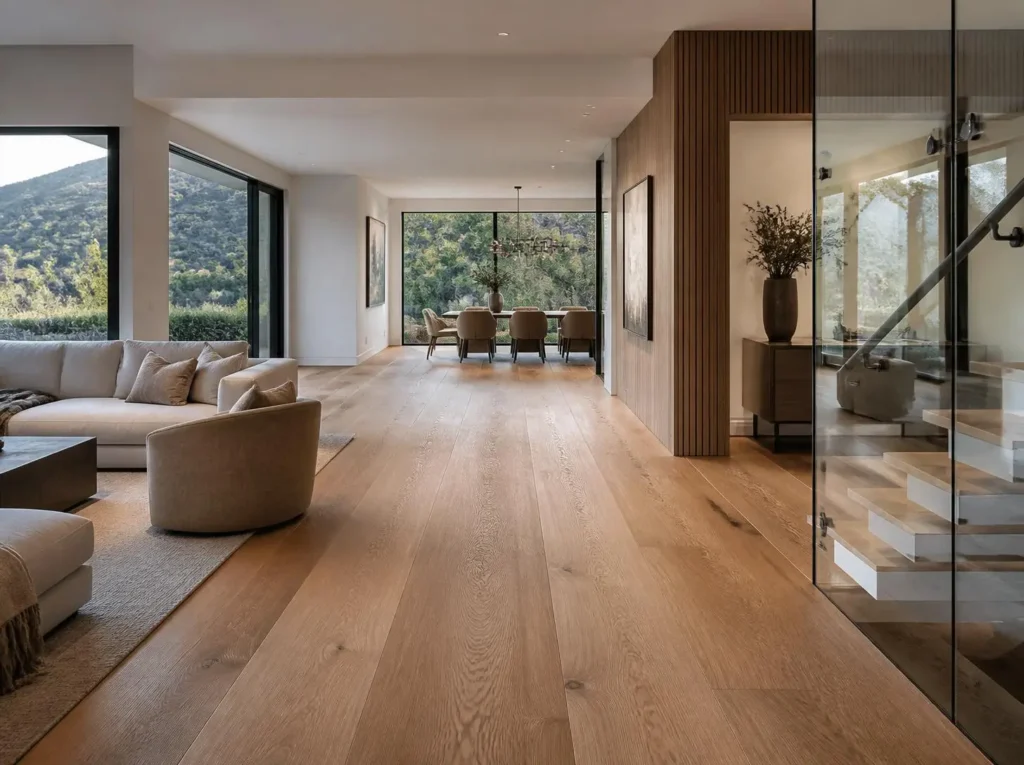
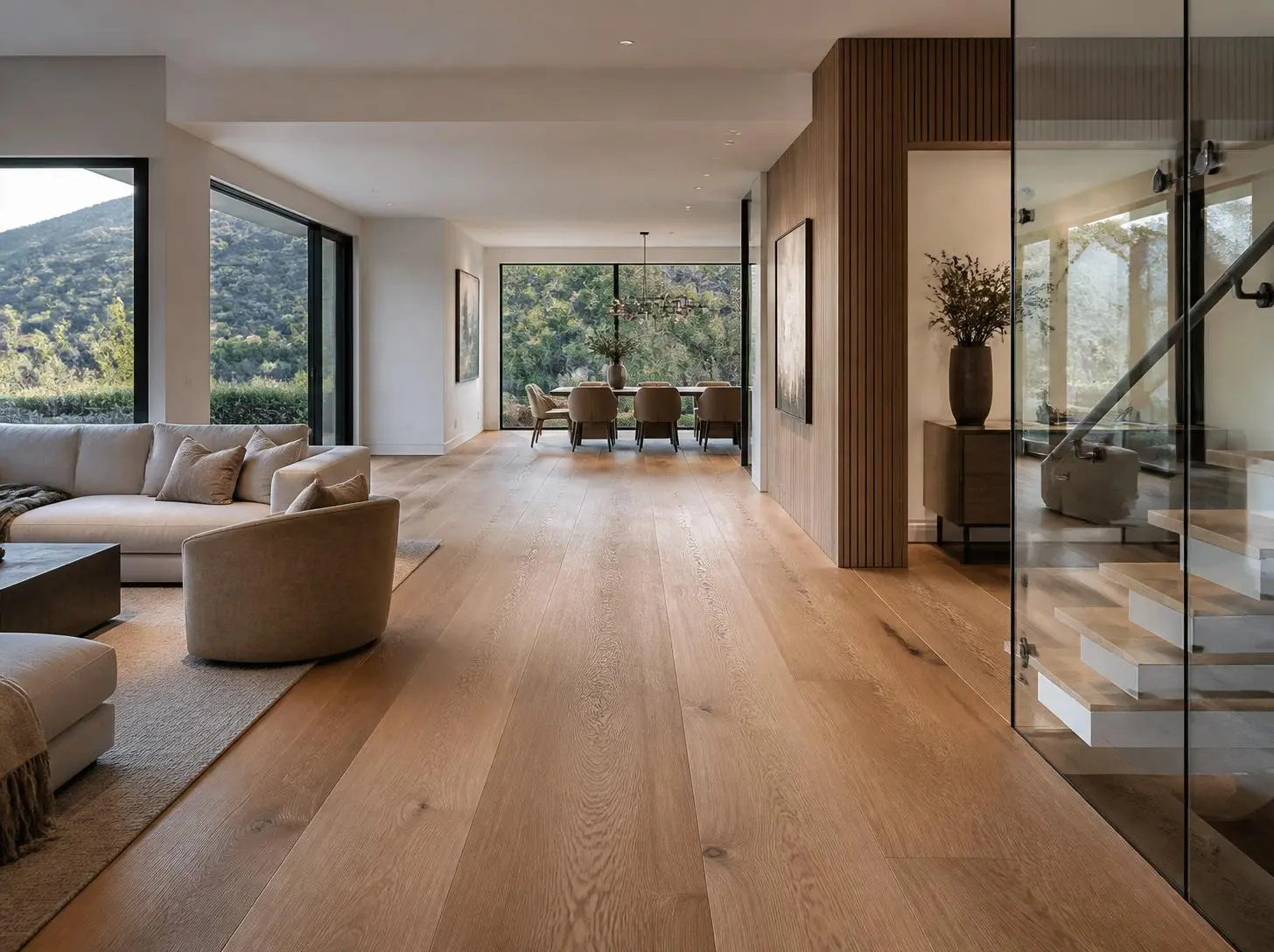
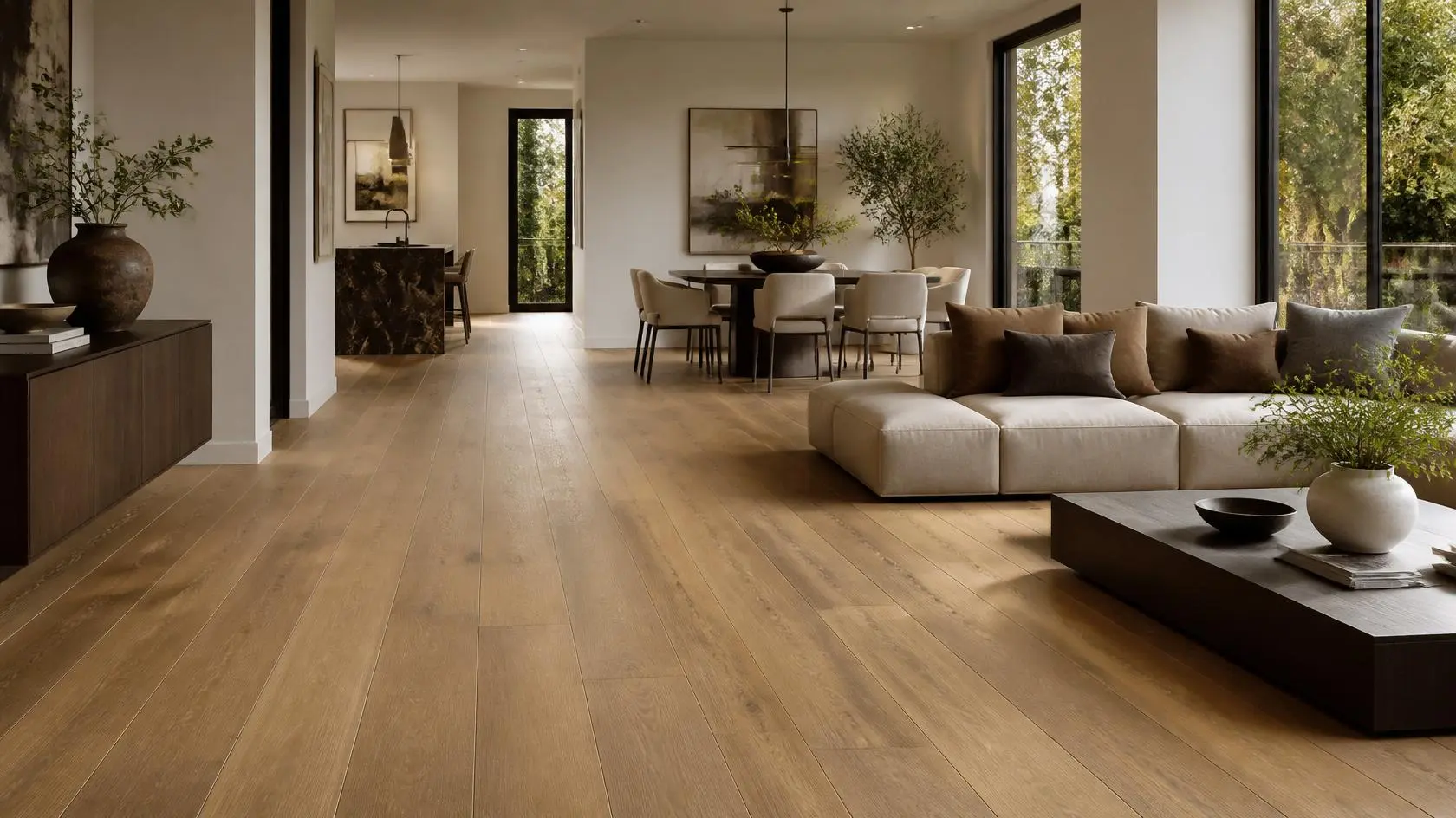
Nothing fully replaces the warmth of real wood. Hardwood has natural depth, subtle color variation and a solid feel that many buyers associate with quality craftsmanship. It also ages gracefully, developing a soft patina over the years.
LVP has improved dramatically. Embossed textures now follow the printed grain, and wider, longer planks reduce the repeating patterns that once gave vinyl away. Still, LVP can feel slightly hollow or cooler underfoot, especially without a quality underlayment.
Resale Value in Walnut Creek
Real estate in Walnut Creek and the surrounding Contra Costa communities remains competitive. Buyers touring higher-end homes often expect real wood in main living areas, and hardwood is frequently highlighted in listings as a premium feature.
That said, well-installed LVP no longer hurts a sale the way older sheet vinyl once did. Many buyers appreciate its low maintenance. If you plan to sell within a few years, hardwood in the living spaces and LVP in wet areas is a balanced strategy we often recommend.
Which Rooms Suit Each Floor?
We recommend hardwood for living rooms, dining rooms, bedrooms and formal entry areas where moisture is limited and appearance matters most. These spaces benefit from the timeless character of natural wood.
LVP fits kitchens, bathrooms, laundry rooms, garages converted to living space and rental units. It handles splashes and heavy traffic without constant worry. When you combine both materials, matching tones and careful transitions create a seamless look from room to room. If your flooring project is part of a larger update, our interior remodeling services can coordinate every trade.
Maintenance and Long-Term Care
LVP is simple to maintain. Regular sweeping and a damp mop with a manufacturer-approved cleaner keep it looking fresh. Avoid harsh chemicals and steam mops unless the product specifically allows them.
Hardwood needs a little more attention. Use felt pads under furniture, place rugs at entryways and keep indoor humidity steady. A professional screen and recoat every few years refreshes the finish before deeper wear sets in.
Making the Final Decision
There is no universal winner in the hardwood floor vs LVP comparison. Hardwood offers authentic beauty, refinishing potential and strong resale appeal. LVP delivers water resistance, durability and lower cost. The best choice depends on how each room is used and how long you plan to stay.
Choosing an experienced installer matters just as much as choosing the material. Read our tips on choosing the right flooring contractor in Walnut Creek, then contact our team for an on-site consultation and a detailed estimate.
Frequently Asked Questions
1. Is LVP cheaper than hardwood?
Yes, LVP is usually less expensive for both materials and installation. Hardwood costs more upfront but can last for generations with refinishing.
2. Can LVP be installed over existing floors?
Often it can, provided the existing surface is flat, clean and firmly attached. We always inspect the subfloor first to avoid future problems.
3. Does hardwood add more value than LVP?
Hardwood is generally viewed as a premium feature by buyers. However, quality LVP in kitchens and bathrooms is widely accepted and rarely reduces value.